Energy Executive Quits Pipeline Review, Calls NEB Process A ‘Public Deception’

Energy Executive Quits Trans Mountain Pipeline Review, Calls NEB Process A ‘Public Deception’

Emma Gilchrist
desmog: November 3, 2014

An energy executive is weighing in on the federal review of Kinder Morgan’s Trans Mountain oil pipeline expansion with a scathing letter that calls the National Energy Board’s review process “fraudulent” and a “public deception” — and calls for the province of British Columbia to undertake its own environmental assessment.

Marc Eliesen — who has 40 years of executive experience in the energy sector, including as a board member at Suncor — writes in his letter to the National Energy Board that the process is jury-rigged with a “pre-determined outcome.”

Eliesen is the former CEO of BC Hydro, former chair of Manitoba Hydro and has served as a deputy minister in seven different federal and provincial governments.

In his letter, Eliesen tells the National Energy Board (NEB) that he offered his expertise as an intervenor in good faith that his time would be well spent in evaluation Trans Mountain’s proposal.

“Unfortunately, I have come to the conclusion that the board, through its decisions, is engaged in a public deception,” Eliesen writes. “Continued involvement with this process is a waste of time and effort, and represents a disservice to the public interest because it endorses a fraudulent process.”

Eliesen writes that he was dismayed when the oral cross-examination phase was removed from the Trans Mountain hearings. He notes that oral cross-examination has served as a critical part of all previous Section 52 oil pipeline hearings.

“It is my experience that when a proponent does not face the spectre of oral cross-examination, their written responses to interrogatories suffer from a lack of detail and accountability,” Eliesen writes. “Still, I was willing to see the results of the Information Request process the board promised would be sufficient.”

When those information requests came back, however, Eliesen lost all hope in the process.

The unwillingness of Trans Mountain to address most of my questions and the board’s almost complete endorsement of Trans Mountain’s decision has exposed this process as deceptive and misleading. Proper and professional public interest due diligence has been frustrated, leading me to the conclusion that this board has a predetermined course of action to recommend approval of the project and a strong bias in favour of the proponent.

In effect, this so-called public hearing process has become a farce, and this board a truly industry captured regulator.

A regulator is considered ‘captured’ when it turns into more of a industry facilitator, rather than a regulatory watchdog.

Kinder Morgan’s Trans Mountain expansion proposal would triple the amount of oil the company ships to Burnaby and increase the number of oil tankers travelling through Vancouver Harbour and the Gulf Islands seven-fold.

(read the full article at desmog)

Marc Eliesen’s letter:

Marc Eliesen Letter of Withdrawal from Kinder Morgan Trans Mountain expansion NEB process


Alternative Free Press
-fair use-

Justice Department Using Fake Cell Towers On Airplanes, Collecting Data From Countless Cell Phones

Annabelle Bamforth
BenSwann.com : November 14, 2014

According to a new report from the Wall Street Journal, the Justice Department has been operating a surveillance program that uses fake cell phone towers placed on airplanes to collect identifying data from a vast number of cell phones.

In this program, Cessna aircraft operated by the US Marshals Service fly over most of the United States, embedded with small devices called “dirtboxes” by insider sources familiar with the program. The dirtboxes mimic cell phone towers which prompt cell phones to reveal their identifying information and location, including phones with encryption technology. The program has been utilized by the Justice Department and US Marshals Service since 2007.

In September, Benswann.com reported that fake cell phone towers, or “interceptors”, had been discovered near military bases throughout the United States.

The program insiders have said that this program is in place for the purpose of “locating cellphones linked to individuals under investigation by the government, including fugitives and drug dealers, but it collects information on cellphones belonging to people who aren’t criminal suspects.” The individuals providing information about the program said that data from tens of thousands of phones can be collected after one flight.

(read the full article at BenSwann.com)
(original report at WSJ)

Alternative Free Press -fair use-
CSIS ignored 9/11 warnings & allowed assassinations on Canadian soil, says ex-spy in court docs

CSIS allowed targeted assassination of 2 residents on Canadian soil, says ex-spy in court docs

Jorge Barrera
APTN National News: November 14, 2014

Canadian spies used death threats to secure sources and allowed the assassination of two people on Canadian soil by a foreign agency, a former intelligence officer alleges in documents filed with the Federal Court.

Danny Palmer, a former intelligence officer with the Canadian Security Intelligence Service (CSIS), also said he authored two threat assessments in April and August 2001 warning of an “aerial attack” against the U.S. that were never passed on to U.S. authorities, according to court documents.

Palmer, a 12 year-veteran of CSIS, claimed in court documents he was fired from the spy agency because he repeatedly raised concerns about some of CSIS’ practices. He said the practices undermined the agency’s operations along with “national and international security.”

(Read the full article at APTN)

Alternative Free Press -fair use-

Banksters laughing at slap on wrist for foreign exchange rigging – Now it’s back to “business as usual”

Mega Banks Are Fined for Foreign Exchange Rigging – Now It’s Back To “Business as Usual”

Michael Krieger
Liberty Blitzkrieg: November 12, 2014

Far from chastening the world’s biggest currency trading firms, the multi-billion dollar fines levied by regulators on Wednesday are more likely to draw a line under the affair and gradually allow a return to business as usual.

A year into a wide-ranging industry probe into charges that banks routinely fleeced clients over currencies, industry observers and politicians were frustrated by a deal they said showed the affair will end just with fines rather than any reform of what they say is the Wild West of financial markets.

– From the Reuters article: Banks pay up and carry on after FX fines

[…]

Absolutely nothing will change despite mega banks once again being caught in extraordinarily unethical behavior. [Reuters] admits the mega banks are essentially allowed to self-regulate in this market and will continue to do so. […]

But in essence, Wednesday’s rulings put the foreign exchange market, long “self-regulated” by banks and people who provide services to banks, well on the way to seeing off any risk of a new era of overarching global regulation.

“It seems to be business as usual — banks blow up, pay fines, and we move on. They just seem to be inventing new ways to break the rules,” said Mark Garnier, a former City financier and Conservative member of the UK parliamentary committee charged with overseeing finance.

They have fallen over themselves to play ball with the regulators and, given the complicated technical and financial nature of the probe, lawyers and consultants employed by banks have done much of the actual investigative work.

“The banks have been allowed to investigate themselves,” one source familiar with the investigation told Reuters. “The investigated decide what they want to investigate, what they admit to, and how much they will pay.”

Meanwhile, Bloomberg (the media outlet) provided some snippets from the crooked traders’ chatrooms. Here are a few:

Traders worked together to “whack” the market, called themselves a “cartell” and congratulated each other for a job well done, according to transcripts released by regulators today.

“Ok, i got a lot of euros,” a currency trader at JPMorgan Chase & Co. said in an undated 3:51 p.m. message to his counterpart at Citigroup Inc. A minute later he says, “tell you what, lets double team it.”

In another excerpt, traders at Citigroup, JPMorgan, and UBS debate whether to invite a fourth into a private chat room. “Are we ok with keeping this as is .. ie the info lvls & risk sharing?” the UBS trader asks at 7:49 a.m.

A minute later the JPMorgan trader tries to ensure that the new member puts the interests of the group first. “You know him — will he tell rest of desk stuff — or god forbin his nyk…” referring to New York colleagues.

The Citigroup trader then chimes in, “yes — that’s really imp[ortant] q[uestion] — dont want other numpty’s in mkt to know,” according to the transcripts, which added the wording clarification.

“But not only that,” the trader added. “Is he gonna protect us like we protect each other against our own branches?”

You can’t make this stuff up.

No jail sentences, no reduction in criminality. This isn’t rocket science.

(read the full article at Liberty Blitzkrieg)

Kinder Morgan misleading public regarding Trans Mountain pipeline expansion

Study questions benefits of Kinder Morgan’s proposed Trans Mountain expansion

By Lauren Krugel
The Canadian Press: November 10, 2014

Kinder Morgan is overplaying the economic benefits and downplaying the costs of its proposed Trans Mountain pipeline expansion, according to a report released Monday.

Simon Fraser University’s Centre for Public Policy Research teamed with The Goodman Group Ltd., a California-based consulting firm, to examine the estimated impacts of the project.

The report “strongly recommends that the citizens and decision-makers of B.C. and Metro Vancouver reject this pipeline, which is neither in the economic nor public interest of B.C. and Metro Vancouver.”

The Trans Mountain pipeline currently ships 300,000 barrels of petroleum products per day from the Edmonton area to the West Coast. The $5.4-billion expansion would nearly triple its capacity to 890,000 barrels a day, enabling crude exports to Asia via the Vancouver area.

In its regulatory application to the National Energy Board late last year, Kinder Morgan included an analysis by the Conference Board of Canada, an economic think-tank based in Ottawa. The conference board estimated 36,000 person-years of employment in B.C. while the pipeline was being built.

Monday’s report disputes those numbers, saying expected employment during construction would be about a third of that — 12,000 person years, tops. That’s less than less than 0.2 per cent of total provincial employment.

The number of long-term jobs is also overstated, according to the SFU-Goodman report.

Kinder Morgan has projected 50 direct full-time jobs once the pipeline is up and running, with 2,000 resulting from the project’s spinoff benefits. The report pegs the spinoff jobs at closer to 800.

The report’s authors say B.C. government coffers will get a “tiny” benefit from the Trans Mountain expansion, with Alberta and oilsands producers the main beneficiaries. Property tax benefits for B.C. communities along the route would average less than one per cent of current total municipal revenues.

“B.C. is not getting its fair share of benefits from this project,” said Ian Goodman, president of The Goodman Group.

On the cost side, the report also takes issue with Kinder Morgan’s numbers. The company’s most expensive spill scenario puts the cost at $100 million to $300 million. Brigid Rowan, senior energy economist with the Goodman Group, said a large spill in a highly populated area like Metro Vancouver could cost up to $5 billion.

“Putting it all together, the benefits are not as good as we’ve been told, but the costs are much worse,” she said.

(read the full article at Vancouver Sun

—-
Alternative Free Press -fair use-

Fracking linked to Alberta earthquakes, study indicates

Kim Trynacity, Alicja Siekierska
CBC News: November 10, 2014

Carmen Langer had just left his bed to grab a drink of water when he felt his house northeast of Peace River, Alta., begin to shake.

“At first I thought I wasn’t feeling very good that day… and it was just my blood sugar, but no, it shook pretty good,” Langer said about the Nov. 2 incident.

Moments after the shaking stopped, his neighbours were calling, asking if he had felt what they just felt.

“After a few minutes, I realized it was an earthquake,” Langer said.

Natural Resources Canada (NRCan) registered a small, 3.0-magnitude earthquake that was “lightly felt” from Three Creeks to St. Isidor in northern Alberta at 11:14 p.m. MT. NRCan said on its website there were no reports of damage, and that “none would be expected.”

Jeff Gu, a seismologist at the University of Alberta, said the earthquake could have been caused by shifting rock formations in the region — but added there could be another possible explanation.

“Certainly that region is not immune to earthquake faulting, but I would say having actual earthquakes in that area is relatively recent, relatively new,” he said.

Gu is one of three authors of a recently published study in the Journal of Geophysical Research, a peer-reviewed publication that looked at four years of earthquake data around Rocky Mountain House. The study concludes that waste-water injection into the ground is highly correlated with spikes in earthquake activity in the area.

(read the full article at CBC)

RELATED:
Study confirms fracking wastewater causing central US earthquakes

Record Earthquake Activity in Oklahoma: Experts Blame Fracking

Alberta Oil Consultant Exposes Fracking Crimes

—-
Alternative Free Press -fair use-

Whistleblower exposes US Government’s cover up of fraud by bank

AlternativeFreePress.com

Alayne Fleischmann is a Securities Lawyer and former employee of JP Morgan Chase who has recently disclosed the US government’s involvement with covering up the “biggest cases of white-collar crime in American history.”

Fleischmann provided these details in an interview with Rolling Stone in which she describes working for JP Morgan Chase as a deal manager between 2006 and 2008. She witnessed crimes relating to compliance and diligence sabotage including intimidation, abuse, “toxic loans”, and policies such as banning email to avoid paper trails.

Apparently, that was just the tip of the iceburg:

Everything that I thought was bad at the time turned out to be a million times worse” Alayne Fleischmann

According to Rolling Stone, Fleischmann sent a letter to William Buell, a managing director at JP Morgan Chase. The letter “warned Buell of the consequences of reselling bad loans as securities and gave detailed descriptions of breakdowns in Chase’s diligence process.”

Amazingly, instead of prosecuting JP Morgan Chase, the government “decided to help Chase bury the evidence” and charges against the bank, were “suddenly canceled, and no complaint was filed.”

Fleischmann serves as an extraordinary role model, unafraid to stand up against the corrupt powers that be:
I could be sued into bankruptcy. I could lose my license to practice law. I could lose everything, but if we don’t start speaking up, then this really is all we’re going to get: the biggest financial cover-up in history.” – Alayne Fleischmann

(Read the Rolling Stone article here: http://www.rollingstone.com/politics/news/the-9-billion-witness-20141106)

Compiled by Alternative Free Press
Creative Commons License
Whistleblower exposes US Government’s cover up of fraud by bank by AlternativeFreePress.com is licensed under a Creative Commons Attribution-ShareAlike 4.0 International License.

Alternative Free Press -fair use-
Key Figures In CIA-Crack Cocaine Scandal Begin To Come Forward (2014)

Ryan Grim, Matt Sledge, Matt Ferner
The Huffington Post : October 10, 2014

With the public in the U.S. and Latin America becoming increasingly skeptical of the war on drugs, key figures in a scandal that once rocked the Central Intelligence Agency are coming forward to tell their stories in a new documentary and in a series of interviews with The Huffington Post.

More than 18 years have passed since Pulitzer Prize-winning journalist Gary Webb stunned the world with his “Dark Alliance” newspaper series investigating the connections between the CIA, a crack cocaine explosion in the predominantly African-American neighborhoods of South Los Angeles, and the Nicaraguan Contra fighters — scandalous implications that outraged LA’s black community, severely damaged the intelligence agency’s reputation and launched a number of federal investigations.

It did not end well for Webb, however. Major media, led by The New York Times, Washington Post and Los Angeles Times, worked to discredit his story. Under intense pressure, Webb’s top editor abandoned him. Webb was drummed out of journalism. One LA Times reporter recently apologized for his leading role in the assault on Webb, but it came too late. Webb died in 2004 from an apparent suicide. Obituaries referred to his investigation as “discredited.”

Now, Webb’s bombshell expose is being explored anew in a documentary, “Freeway: Crack in the System,” directed by Marc Levin, which tells the story of “Freeway” Rick Ross, who created a crack empire in LA during the 1980s and is a key figure in Webb’s “Dark Alliance” narrative. The documentary is being released after the major motion picture “Kill The Messenger,” which features Jeremy Renner in the role of Webb and hits theaters on Friday.

Webb’s investigation was published in the summer of 1996 in the San Jose Mercury News. In it, he reported that a drug ring that sold millions of dollars worth of cocaine in Los Angeles was funneling its profits to the CIA’s army in Nicaragua, known as the Contras.

Webb’s original anonymous source for his series was Coral Baca, a confidante of Nicaraguan dealer Rafael Cornejo. Baca, Ross and members of his “Freeway boys” crew; cocaine importer and distributor Danilo Blandon; and LA Sheriff’s Deputy Robert Juarez all were interviewed for Levin’s film.

The dual release of the feature film and the documentary, along with the willingness of long-hesitant sources to come forward, suggests that Webb may have the last word after all.

* * * * *

Webb’s entry point into the sordid tale of corruption was through Baca, a ghostlike figure in the Contra-cocaine narrative who has given precious few interviews over the decades. Her name was revealed in Webb’s 1998 book on the scandal, but was removed at her request in the paperback edition. Levin connected HuffPost with Baca and she agreed to an interview at a cafe in San Francisco. She said that she and Webb didn’t speak for years after he revealed her name, in betrayal of the conditions under which they spoke. He eventually apologized, said Baca, who is played by Paz Vega in “Kill The Messenger.”
The major media that worked to undermine Webb’s investigation acknowledged that Blandon was a major drug-runner as well as a Contra supporter, and that Ross was a leading distributor. But those reports questioned how much drug money Blandon and his boss Norwin Meneses turned over to the Contras, and whether the Contras were aware of the source of the funds.

During her interview with HuffPost, Baca recounted meeting Contra leader Adolfo Calero multiple times in the 1980s at Contra fundraisers in the San Francisco Bay Area. He would personally pick up duffel bags full of drug money, she said, which it was her job to count for Cornejo. There was no question, she said, that Calero knew precisely how the money had been earned. Meneses’ nickname, after all, was El Rey De Las Drogas — The King of Drugs.

“If he was stupid and had a lobotomy,” he might not have known it was drug money, Baca said. “He knew exactly what it was. He didn’t care. He was there to fund the Contras, period.” (Baca made a similar charge confidentially to the Department of Justice for its 1997 review of Webb’s allegations, as well as further allegations the investigators rejected.)

Indeed, though the mainstream media at the time worked to poke holes in Webb’s findings, believing that the Contra operation was not involved with drug-running takes an enormous suspension of disbelief. Even before Webb’s series was published, numerous government investigations and news reports had linked America’s support for the Nicaraguan rebels with drug trafficking.

After The Associated Press reported on these connections in 1985, for example, more than a decade before Webb, then-Sen. John Kerry (D-Mass.) launched a congressional investigation. In 1989, Kerry released a detailed report claiming that not only was there “considerable evidence” linking the Contra effort to trafficking of drugs and weapons, but that the U.S. government knew about it.

According to the report, many of the pilots ferrying weapons and supplies south for the CIA were known to have backgrounds in drug trafficking. Kerry’s investigation cited SETCO Aviation, the company the U.S. had contracted to handle many of the flights, as an example of CIA complicity in the drug trade. According to a 1983 Customs Service report, SETCO was “headed by Juan Ramon Matta Ballesteros, a class I DEA violator.”

Two years before the Iran-Contra scandal would begin to bubble up in the Reagan White House, pilot William Robert “Tosh” Plumlee revealed to then-Sen. Gary Hart (D-Colo.) that planes would routinely transport cocaine back to the U.S. after dropping off arms for the Nicaraguan rebels. Plumlee has since spoken in detail about the flights in media interviews.

“In March, 1983, Plumlee contacted my Denver Senate Office and … raised several issues including that covert U.S. intelligence agencies were directly involved in the smuggling and distribution of drugs to raise funds for covert military operations against the government of Nicaragua,” a copy of a 1991 letter from Hart to Kerry reads. (Hart told HuffPost he recalls receiving Plumlee’s letter and finding his allegations worthy of follow-up.)

Plumlee flew weapons into Latin America for decades for the CIA. When the Contra revolution took off in the 1980s, Plumlee says he continued to transport arms south for the spy agency and bring cocaine back with him, with the blessing of the U.S. government.

The Calero transactions Baca says she witnessed would have been no surprise to the Reagan White House. On April 15, 1985, around the time Baca says she saw Calero accepting bags of cash, Oliver North, the White House National Security Counsel official in charge of the Contra operation, was notified in a memo that Calero’s deputies were involved in the drug business. Robert Owen, North’s top staffer in Central America, warned that Jose Robelo had “potential involvement with drug-running and the sale of goods provided by the [U.S. government]” and that Sebastian Gonzalez was “now involved in drug-running out of Panama.”

North’s own diary, originally uncovered by the National Security Archive, is a rich source of evidence as well. “Honduran DC-6 which is being used for runs out of New Orleans is probably being used for drug runs into the U.S.,” reads an entry for Aug. 9, 1985, reflecting a conversation North had with Owen about Mario Calero, Adolfo’s brother.

An entry from July 12, 1985 relates that “14 million to finance [an arms depot] came from drugs” and another references a trip to Bolivia to pick up “paste.” (Paste is slang term for a crude cocaine derivative product comprised of coca leaves grown in the Andes as well as processing chemicals used during the cocaine manufacturing process.)

Celerino Castillo, a top DEA agent in El Salvador, investigated the Contras’ drug-running in the 1980s and repeatedly warned superiors, according to a Justice Department investigation into the matter. Castillo “believes that North and the Contras’ resupply operation at Ilopango were running drugs for the Contras,” Mike Foster, an FBI agent who worked for the Iran-Contra independent counsel Lawrence Walsh, reported in 1991 after meeting with Castillo, who later wrote the book Powderburns about his efforts to expose the drug-running.

* * * * *

Webb’s investigation sent the CIA into a panic. A recently declassified article titled “Managing A Nightmare: CIA Public Affairs and the Drug Conspiracy Story,” from the agency’s internal journal, “Studies In Intelligence,” shows that the spy agency was reeling in the weeks that followed.

“The charges could hardly be worse,” the article opens. “A widely read newspaper series leads many Americans to believe CIA is guilty of at least complicity, if not conspiracy, in the outbreak of crack cocaine in America’s inner cities. In more extreme versions of the story circulating on talk radio and the Internet, the Agency was the instrument of a consistent strategy by the US Government to destroy the black community and to keep black Americans from advancing. Denunciations of CIA — reminiscent of the 1970s — abound. Investigations are demanded and initiated. The Congress gets involved.”

The emergence of Webb’s story “posed a genuine public relations crisis for the Agency,” writes the CIA Directorate of Intelligence staffer, whose name is redacted.

In December 1997, CIA sources helped advance that narrative, telling reporters that an internal inspector general report sparked by Webb’s investigation had exonerated the agency.

Yet the report itself, quietly released several weeks later, was actually deeply damaging to the CIA.

“In 1984, CIA received allegations that five individuals associated with the Democratic Revolutionary Alliance (ARDE)/Sandino Revolutionary Front (FRS) were engaged in a drug trafficking conspiracy with a known narcotics trafficker, Jorge Morales,” the report found. “CIA broke off contact with ARDE in October 1984, but continued to have contact through 1986-87 with four of the individuals involved with Morales.”

It also found that in October 1982, an immigration officer reported that, according to an informant in the Nicaraguan exile community in the Bay Area, “there are indications of links between [a specific U.S.-based religious organization] and two Nicaraguan counter-revolutionary groups. These links involve an exchange in [the United States] of narcotics for arms, which then are shipped to Nicaragua. A meeting on this matter is scheduled to be held in Costa Rica ‘within one month.’ Two names the informant has associated with this matter are Bergman Arguello, a UDN member and exile living in San Francisco, and Chicano Cardenal, resident of Nicaragua.”

The inspector general is clear that in some cases “CIA knowledge of allegations or information indicating that organizations or individuals had been involved in drug trafficking did not deter their use by CIA.” In other cases, “CIA did not act to verify drug trafficking allegations or information even when it had the opportunity to do so.”

“Let me be frank about what we are finding,” the CIA’s inspector general, Frederick Hitz, said in congressional testimony in March 1998. “There are instances where CIA did not, in an expeditious or consistent fashion, cut off relationships with individuals supporting the Contra program who were alleged to have engaged in drug trafficking activity or take action to resolve the allegations.”

* * * * *

One of the keys to Webb’s story was testimony from Danilo Blandon, who the Department of Justice once described as one of the most significant Nicaraguan drug importers in the 1980s.

“You were running the LA operation, is that correct?” Blandon, who was serving as a government witness in the 1990s, was asked by Alan Fenster, attorney representing Rick Ross, in 1996.

“Yes. But remember, we were running, just — whatever we were running in LA, it goes, the profit, it was going to the Contra revolution,” Blandon said.

Levin, the documentary filmmaker, tracked down Blandon in Managua.

“Gary Webb tried to find me, Congresswoman Maxine Waters tried to find me, Oliver Stone tried to find me. You found me,” Blandon told Levin, according to notes from the interview the director provided to HuffPost.

Waters, a congresswoman from Los Angeles, had followed Webb’s investigation with one of her own.

In the interview notes with filmmaker Levin, Blandon confirms his support of the Contras and his role in drug trafficking, but downplays his significance.

Levin’s film not only explores the corrupt foundations of the drug war itself, but also calls into question the draconian jail sentences the U.S. justice system meted out to a mostly minority population, while the country’s own foreign policy abetted the drug trade.

“I knew that these laws were a mistake when we were writing them,” says Eric Sterling, who was counsel to the U.S. House Judiciary Committee in the 1980s and a key contributor to the passage of mandatory-minimum sentencing laws, in the documentary.

In 1980, there were roughly 40,000 drug offenders in U.S. prisons, according to research from The Sentencing Project, a prison sentencing reform group. By 2011, the number of drug offenders serving prison sentences ballooned to more than 500,000 — most of whom are not high-level operators and are without prior criminal records.

“There is no question that there are tens of thousands of black people in prison serving sentences that are decades excessive,” Sterling says. “Their families have been destroyed because of laws I played a central role in writing.”

The height of the drug war in the 1980s also saw the beginning of the militarization of local law enforcement, the tentacles of which are seen to this day, most recently in Ferguson, Missouri.

In an interview with The Huffington Post, former LA County Sheriff’s Deputy Robert Juarez, who served with the department from 1976 to 1991 and was later convicted along with several other deputies in 1992 during a federal investigation of sheriff officers stealing seized drug money, described a drug war culture that frequently put law enforcement officers into morally questionable situations that were difficult to navigate.

Between 1982 and 1984, Congress restricted funding for the Contras, and by 1985 cut it off entirely. The Reagan administration, undeterred, conspired to sell arms to Iran in exchange for hostages, using some of the proceeds to illegally fund the Contras. The scandal became known as Iran-Contra.

Drug trafficking was a much less convoluted method of skirting the congressional ban on funding the Contras, and the CIA’s inspector general found that in the early years after Congress cut off Contra funding, the CIA had alerted Congress about the allegations of drug trafficking. But while the ban was in effect, the CIA went largely silent on the issue.

“CIA did not inform Congress of all allegations or information it received indicating that Contra-related organizations or individuals were involved in drug trafficking,” the inspector general’s report found. “During the period in which the FY 1987 statutory prohibition was in effect, for example, no information has been found to indicate that CIA informed Congress of eight of the ten Contra-related individuals concerning whom CIA had received drug trafficking allegations or information.”

This complicity of the CIA in drug trafficking is at the heart of Webb’s explosive expose — a point Webb makes himself in archival interview footage that appears in Levin’s documentary.

“It’s not a situation where the government or the CIA sat down and said, ‘Okay, let’s invent crack, let’s sell it in black neighborhoods, let’s decimate black America,’” Webb says. “It was a situation where, ‘We need money for a covert operation, the quickest way to raise it is sell cocaine, you guys go sell it somewhere, we don’t want to know anything about it.'”

(read the full article at Huffington Post)


Alternative Free Press -fair use-

7 Things Harper Doesn’t Want You To Know About The China Trade Treaty (And A Few He Does)

Daniel Tencer
Huffington Post: September 17, 2014

Chinese investors will have the right to challenge our laws with no recourse to Canadian courts

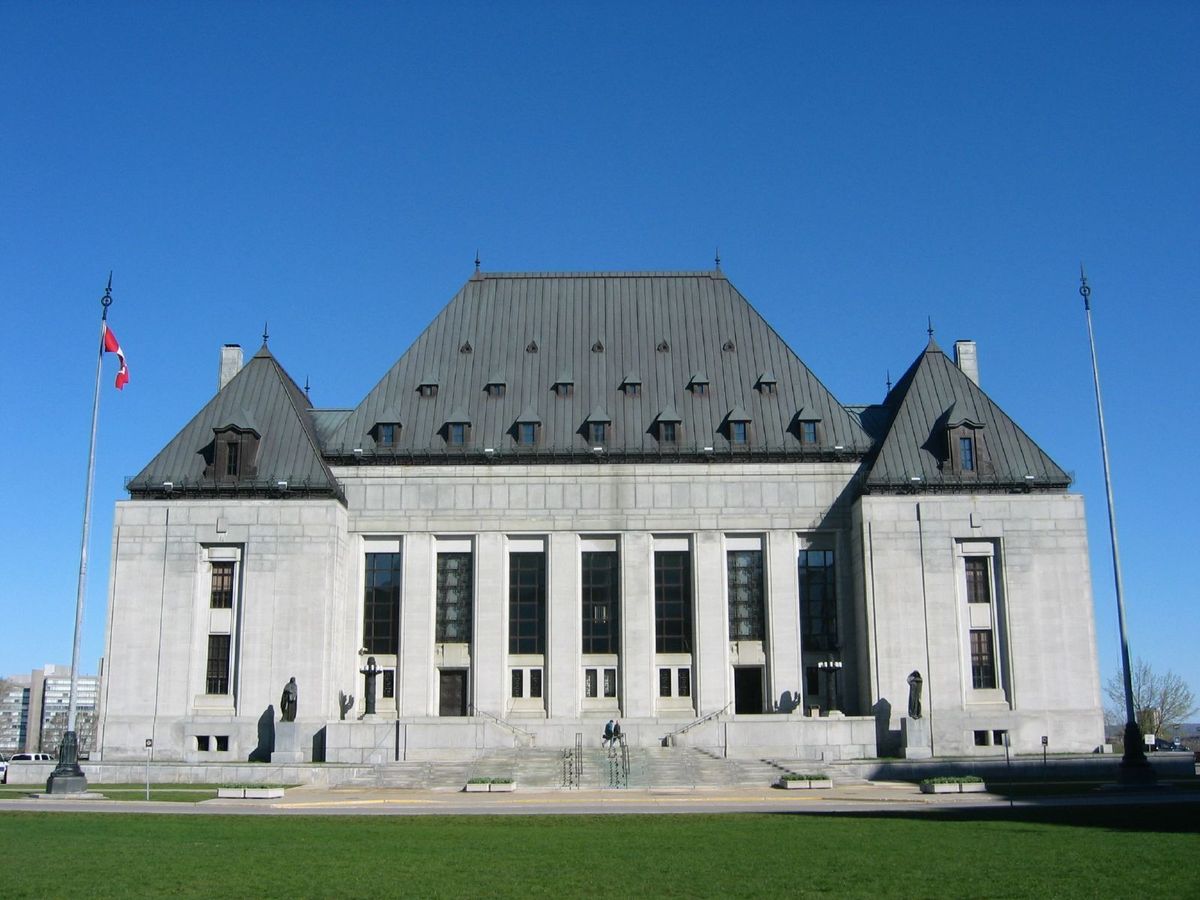
Supreme Court of Canada (Getty)
The Canada-China FIPA isn’t a complete trade deal. It’s more like one chapter of a trade deal — the chapter that deals with protecting investors’ rights.

Under these agreements, foreign companies gain the right to sue the host country in an international tribunal that doesn’t answer to national courts. Critics say this essentially gives foreign companies the ability to trump Canadian laws.

True, but under the Canada-China FIPA, a Chinese investor or business will have to prove they were subjected to different rules than would apply to a local investor or business. That strongly limits the extent to which Canadian laws can be challenged at the tribunals, and Canada’s ability to pass environmental and other laws likely won’t be as constrained as critics say. Canada will still be able to reject major investments from Chinese companies.

Supporters of the Canada-China FIPA say Canada needs a deal like this with China because we are running a $30-billion-a year trade deficit with the country. To get our money back, we need Chinese investment, and the FIPA gives investors the confidence they need to put their money here.

  • The government can keep lawsuits secret

    Getty
    In the treaty, the government retained the right to hide documents filed in a lawsuit against Canada under the Canada-China FIPA. This is despite (or perhaps because of) the fact that these rulings can go against Canadian government policy.
  • There was no public consultation, no debate, no legislation

    Getty
    This trade treaty, meant to last a generation, got an hour of debate in front of the House of Commons’ trade committee, and that’s it.
  • Canada will be bound by the treaty for 31 years

    Getty
    NAFTA can be terminated in six months, but the Canada-China FIPA runs a minimum of 15 years, has a one-year notice of termination period, and extends rights to Chinese companies already operating in Canada by 15 years after the deal is cancelled.

    Supporters of the deal say the at minimum 31-year timeline makes sense for protecting long-term investments and projects.

  • Some say it’s a better deal for China than for Canada

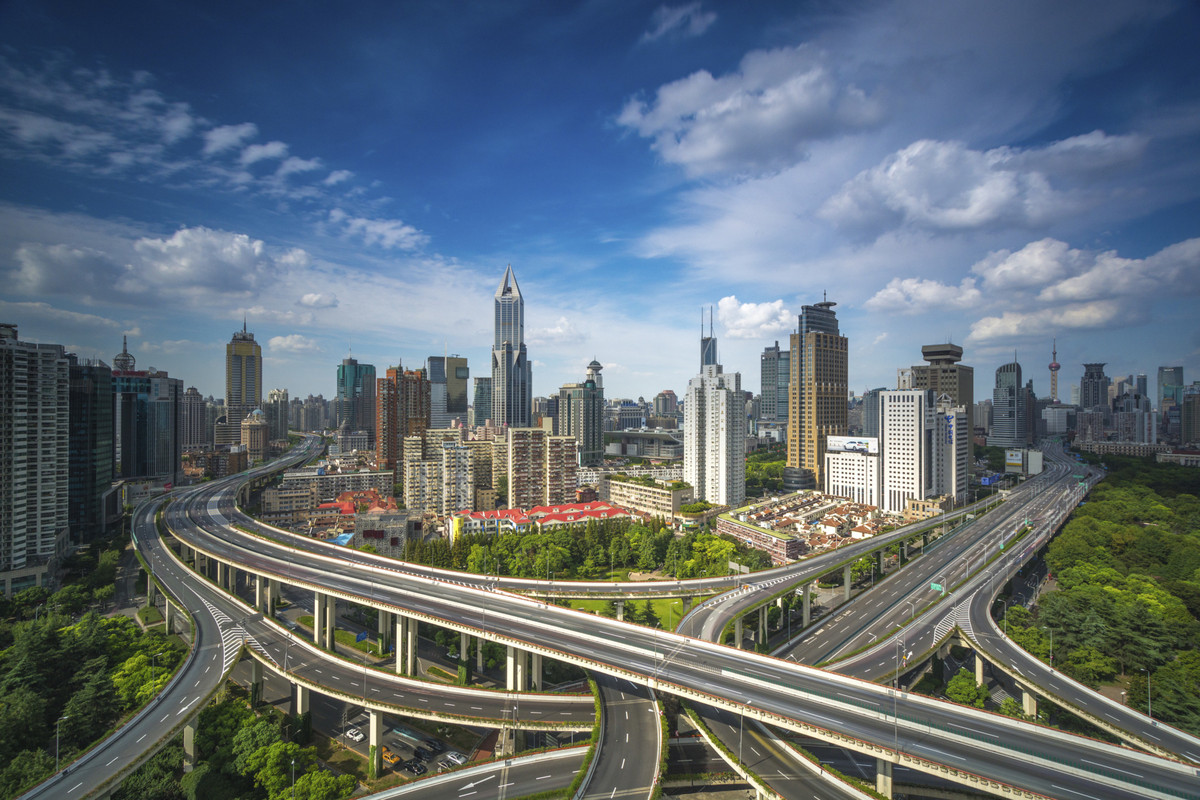
    Shanghai (Getty)
    So far, FIPAs have been advantageous to Canadian business because they have largely protected Canadian investments in other countries. (“Canadian mining companies are using FIPAs with developing countries to claim damages from community opposition to unwanted mega-projects,” the Council of Canadians reports.)

    But with China, Canada is on the other side of that equation — it’s largely the destination country for investment. “Canada will be much more exposed to claims and corresponding constraints” than China under the deal, Osgoode law prof Gus Van Harten writes.

    Though the deal sets up the same protections for Canadians investing in China as for Chinese investors in Canada, it creates “de facto non-reciprocity,” Van Harten argues, because of the imbalance in the trade relationship.

  • Minority shareholders will be able to sue

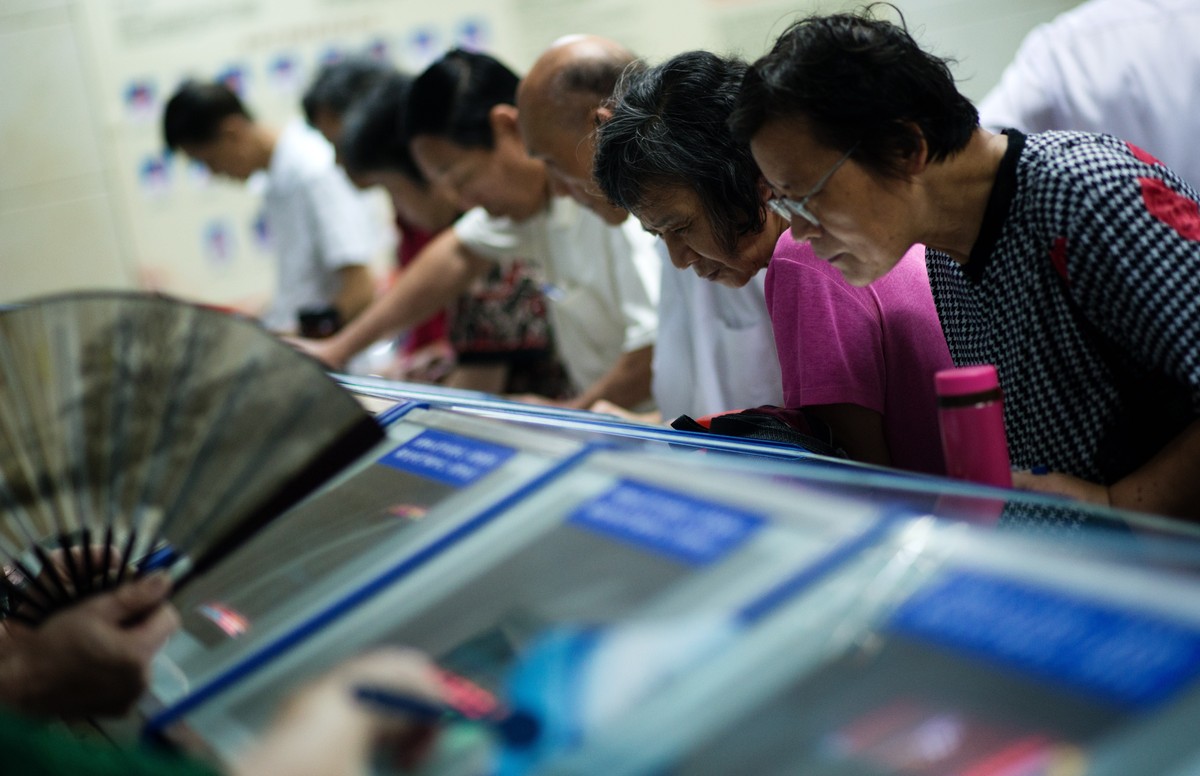
    Investors look at stock prices at a securities exchange in Shanghai on August 22, 2014. (Getty)
    Even if a Chinese citizen owns a small portion of a Canadian company, they will be able to use the tribunals set up under the FIPA, Van Harten says.
  • There’s a legal challenge to the deal in the courts right now

    Hupacasath First Nations welcoming figures, Port Alberni, B.C. (Getty)
    British Columbia’s Hupacasath First Nation launched a court challenge on the constitutionality of the deal in January, 2013, arguing the government had violated its responsibility to consult with first nations on constitutional and treaty issues. The B.C. Supreme Court rejected that argument in October, 2013, but the first nation is now appealing that ruling before the Federal Court of Appeal.

    (read the full article at Huffington Post)

    —-
    Alternative Free Press -fair use-
  • Transcanada has third catastrophic pipeline leak in 9 months.

    Mark Calzavara
    The Council Of Canadians : September 16, 2014

    Early this morning a natural gas pipeline owned by TransCanada ruptured in Benton Harbor, Michigan causing the evacuation of over 500 people. This is the third catastrophic failure for TransCanada since January of this year.

    The Berrien County Sheriff’s Office issued this release around 6 a.m.:

    “At approximately 2am on Tuesday, September 16, 2014 a natural gas line affiliated with TransCanada, leaked at/near the 100 block of North Blue Creek Rd, in Benton Twp. Cause of the leak is currently unknown. Emergency responders, consisting of local police (Benton Twp), County Deputies and Benton Twp Fire Personnel assisted with evacuating residents within one (1) mile radius of the gas line leak. Vehicular traffic was also re-routed away from this area. No known injuries have been reported at the time of this release and authorities are conducting air monitoring. TransCanada pipeline representatives were working on shutting off and/or re-routing the natural gas flow from this leaking gas line.”

    TransCanada’s other two catastrophic failures were in Rocky Mountain House, Alberta in February and in Otterburne, Manitoba in January. TransCanada is seeking permission to convert parts of the same pipeline that failed in Otterburne to carry diluted bitumen as part of their Energy East pipeline project from Alberta to New Brunswick where up to 90% of its 1.1 million barrel per day capacity will be exported unrefined.

    Source: The Council Of Canadians
    Creative Commons License

    v0.1